


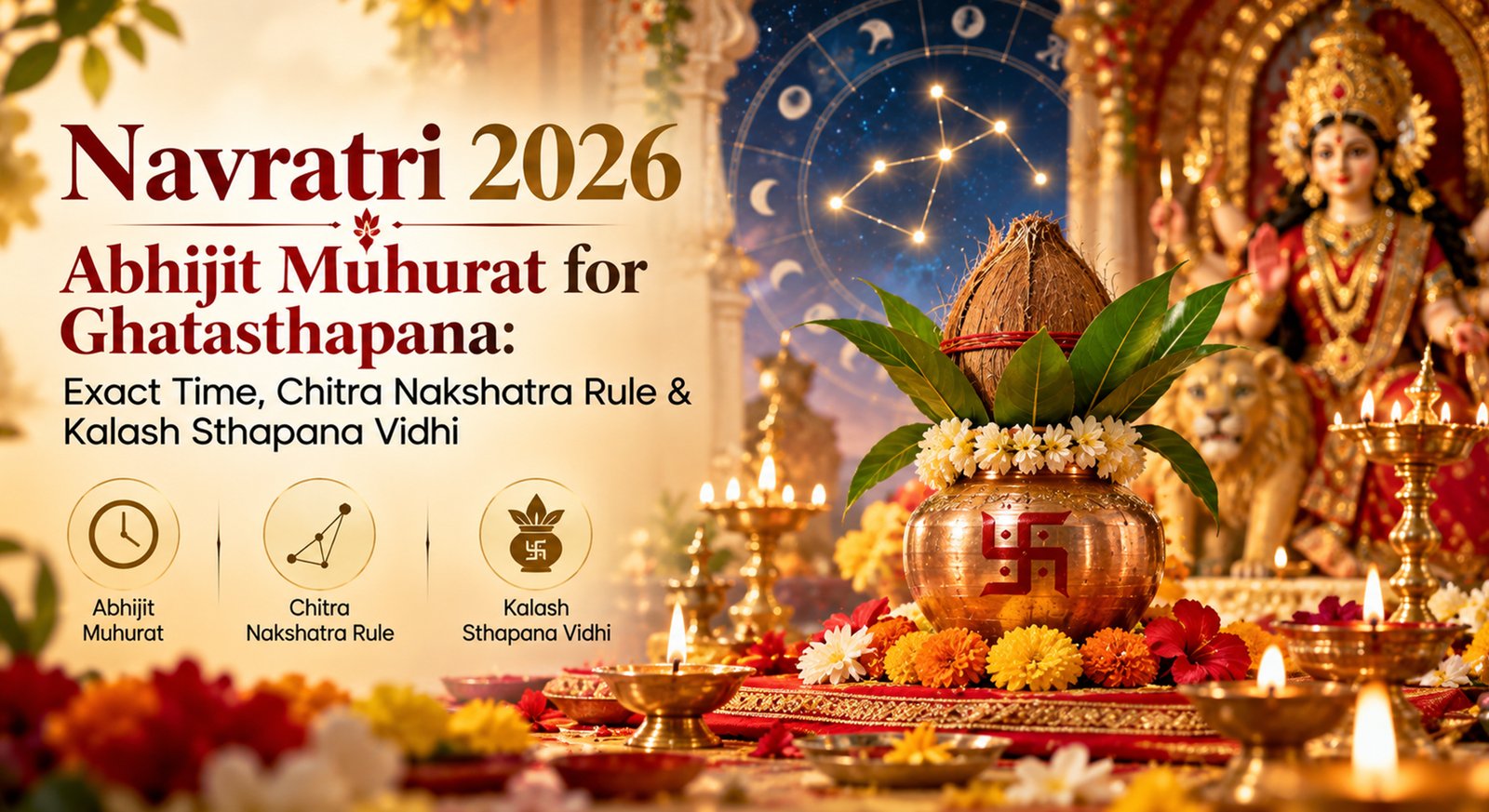
Navratri 2026 Abhijit Muhurat for Ghatasthapana: Exact Time, Chitra Nakshatra Rule & Kalash Sthapana Vidhi
Planning Navratri puja starts with one key detail: the correct navratri 2026 ghatasthapana time on Sunday, 11 October 2026, so your Kalash is placed in shubh lagna and under the right tithi.
If you have ever worried about Chitra Nakshatra, Vaidhriti Yoga, or whether to follow the morning slot or Abhijit Muhurat, this guide clears that confusion and gives a step-by-step Ghatasthapana and Kalash Sthapana Vidhi you can actually follow at home.
Navratri 2026 Ghatasthapana Muhurat At A Glance
Before thinking about samagri or decor, fix the date and muhurat. Shardiya Navratri in 2026 begins on Ashwin Shukla Pratipada, which falls on Sunday, 11 October 2026, as per the standard Panchang for Delhi.
Navratri 2026 Date And Shubh Muhurat
- Date: Sunday, 11 October 2026
- Tithi / Nakshatra: Shukla Pratipada
- Tithi begins: 10 October 2026 9:19 PM
- Tithi ends: 11 October 2026 9:30 PM
- Ghatasthapana Muhurat: 6:19 AM to 10:12 AM
- Ghatasthapana Abhijit Muhurat: 11:44 AM to 12:31 PM
The primary window for Kalash placement is the morning Ghatasthapana Muhurat, as it falls in the first one-third of the day while Pratipada is in effect. The Abhijit slot is a secondary option if you miss the morning or prefer a tighter band.
These timings are for New Delhi, India (IST). Other Indian cities follow the same tithi pattern but the clock time may shift by a few minutes, so check a local Panchang if you live far from North India.
Chitra Nakshatra Rule And Vaidhriti Yoga
Many devotees pause when they hear that Chitra Nakshatra and Vaidhriti Yoga are active on 11 October 2026. Traditional texts often say to avoid these for starting big tasks, so people wonder if they should delay Ghatasthapana.
For 2026, Panchang experts have clearly kept Ghatasthapana on Pratipada itself. The logic is simple: for this ritual, Pratipada tithi and the first one-third of the day carry more weight than the nakshatra or yoga, so Chitra and Vaidhriti do not overrule the main rule.
Some astrologers still recommend focusing on the ghatasthapana abhijit muhurat 2026 if you are very cautious, because Abhijit is treated as a balancing period that cuts through mixed yogas.
If your family priest has a strong view, follow that. Otherwise, sticking to the standard morning slot printed in respected Panchangs keeps you aligned with the mainstream shastra-based practice.
Morning Kalash Sthapana Vs Abhijit Muhurat
Practically, most households in India will perform Ghatasthapana during the morning muhurat, between 6:19 AM and 10:12 AM. This gives enough time for snan and sankalp without rushing.
The abhijit muhurat ghatasthapana time on that day, 11:44 AM to 12:31 PM, is shorter but spiritually intense. If your schedule or family tradition leans strongly towards Abhijit, you can use this slot confidently.
One point people miss is that Ghatasthapana should not spill into the second half of the day just because everyone woke up late. If you cannot realistically finish the puja before the end of the primary window, Abhijit is safer than stretching beyond it.
Once the Kalash is placed, the rest of the Navratri puja—Durga Saptashati path and daily naivedya—can follow your usual timing. The sensitive part is only the moment of establishing the Ghata.
Abhijit Muhurat 11 October 2026: When To Prefer It
Use the abhijit muhurat 11 october 2026 for Ghatasthapana if your house has ongoing renovation or you are feeling uncertain due to mixed yogas, or your purohit has warned about your personal horoscope and starting in the early morning.
This slot is especially helpful for working couples who cannot manage an unhurried ritual before leaving for office. Planning for a late-morning puja around Abhijit keeps the sankalp clear and your mind calm.
Step-By-Step Kalash Sthapana Vidhi
The core Vidhi is simple if you keep the sequence right. You do not need a long list of rare items; clarity and shraddha matter more than show.
First, clean the puja room before the muhurat. Spread a clean red or yellow cloth on a low wooden chowki and draw a simple swastik or lotus with roli and rice.
Prepare a wide earthen or steel pot with clean mud and seven to nine grains or seeds mixed in. This base represents the earth and future growth of your sankalp.
Next, take a copper or brass Kalash, fill it with water, add a little gangajal if available, and place akshat, a coin and some whole cloves or cardamom inside. Tie a red mauli around the neck of the Kalash.
Place five mango leaves around the mouth and set a whole coconut on top, its husk intact, pointing upwards. This combination symbolises Devi’s presence in your home for all nine nights.
Kalash Sthapana Muhurat 2026: Practical Tips
During the kalash sthapana muhurat 2026, sit facing east or north if possible. Start with Ganesh puja, then take a clear sankalp mentioning place, tithi and that you are beginning Shardiya Navratri worship for nine days.
As you place the Kalash on the mud pot, chant a simple Durga mantra you know well. If you are not comfortable with full Vedic mantras, repeating “Om Dum Durgayai Namah” with full attention is completely acceptable.
Keep the diya and dhoop manageable. One steady akhand jyot is better than several diyas that keep going off and distracting you through the day.
Common Ghatasthapana Mistakes To Avoid
The most common mistake is ignoring the tithi and going only by date in the English calendar. In 2026, both are aligned cleanly, but in some years Pratipada can split across two sunrises.
Another frequent issue is placing the Kalash in a cluttered corner, right next to the TV or heavy foot traffic. Once established, the space around Devi’s sthapana should stay calm and relatively undisturbed.
People also forget to keep water level, cotton wicks and ghee or oil ready in advance. Scrambling for basics during the muhurat pulls your attention away from the mantra and intention.
If you are unsure of long texts, do not start Durga Saptashati just because others do. A shorter, sincere daily chant you understand is spiritually stronger than rushing through a big path you cannot follow.
Kalash Sthapana Abhijit Muhurat And Family Traditions
For some lineages, the kalash sthapana abhijit muhurat is always preferred, regardless of other yogas. In such homes, elders may insist on the late-morning slot even if the general Panchang highlights an earlier range.
Respecting your family’s parampara matters, especially for rituals like Navratri that build emotional and spiritual continuity across generations.
Navratri Abhijit Muhurat Time And Daily Puja Rhythm
The broader navratri abhijit muhurat time idea does not end on day one. Many people choose this window on other Navratri days for special path or major daan.
Try to keep a stable daily rhythm: morning snan and basic puja at roughly the same time, evening aarti when most family members can join, and specific events like havan or kanya bhojan pre-planned so they do not clash with work or exams.
Consistency in small daily actions often gives more inner peace than one grand ritual done perfectly once.
Conclusion
Fixing the correct navratri 2026 ghatasthapana time on 11 October 2026, choosing between the main morning slot and Abhijit, and following a clear Kalash Sthapana Vidhi removes most of the stress around starting Shardiya Navratri.
Once the muhurat is honoured and the Kalash is placed with sincerity, you can let the nine days unfold with faith and steady daily puja, keeping Bhavishya Astro’s guidance in mind as you plan your family’s Navratri routine.
Frequently Asked Questions
Q1. When is Navratri Ghatasthapana in 2026?
Ans. Shardiya Navratri Ghatasthapana in 2026 is on Sunday, 11 October 2026, during Shukla Pratipada. The main Ghatasthapana Muhurat is from 6:19 AM to 10:12 AM, with Abhijit Muhurat from 11:44 AM to 12:31 PM in New Delhi.
Q2. Which is better for Ghatasthapana in 2026, morning or Abhijit Muhurat?
Ans. The primary option is the morning Ghatasthapana Muhurat from 6:19 AM to 10:12 AM. You can choose Abhijit Muhurat, 11:44 AM to 12:31 PM, if you want a tighter window or cannot manage the ritual in the earlier slot.
Q3. Is Ghatasthapana allowed when Chitra Nakshatra is active?
Ans. Yes, for 2026 Ghatasthapana is still performed on Pratipada even though Chitra Nakshatra and Vaidhriti Yoga are present. For this puja, Pratipada tithi and the day’s first one-third are treated as more important than the nakshatra.
Q4. What basic items are needed for Kalash Sthapana at home?
Ans. You need a clean chowki and cloth, a pot with soil and grains, a copper or brass Kalash, water, gangajal if available, rice, a coin, red mauli, five mango leaves and a whole coconut. Ghee or oil for diya and some flowers complete the basic setup.
Q5. Can I do Navratri Ghatasthapana without a priest?
Ans. Yes, many families perform Ghatasthapana themselves following a simple Vidhi and basic mantras. Focus on correct muhurat, a clear sankalp and consistent daily puja; elaborate Vedic recitation is helpful but not compulsory for household worship.
Q6. What should I do if I miss the Ghatasthapana Muhurat in the morning?
Ans. If you miss the morning window, aim for Ghatasthapana during Abhijit Muhurat, 11:44 AM to 12:31 PM. If both pass, consult your family priest or a trusted astrologer, as starting later in the day is normally avoided for this specific ritual.