
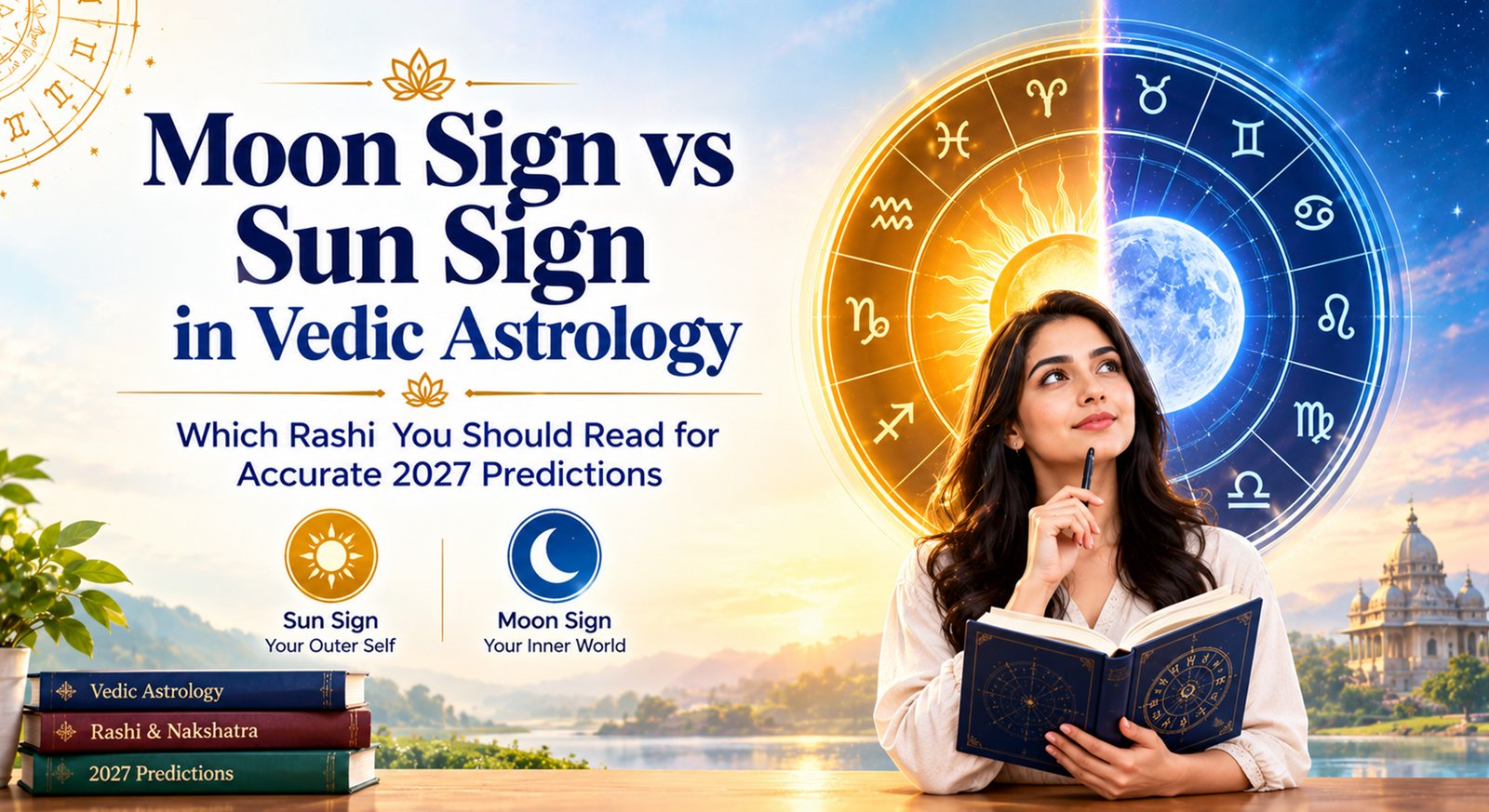
Moon Sign vs Sun Sign in Vedic Astrology: Which Rashi You Should Read for Accurate 2027 Predictions
If you have ever wondered about moon sign vs sun sign in Vedic astrology, you are not alone. Many people read one prediction in the newspaper, another online, then hear something else from an astrologer and end up more confused than when they started.
The real problem is simple: you are often reading the wrong rashi for the question you have, especially for long‑term 2027 predictions. Once you understand which sign shows your mind, which shows your life path, and how current planetary transits touch both, your horoscope starts making sense.
Why Western And Vedic Horoscopes Don’t Match
Before deciding which rashi to follow for 2027, you need to know why your usual “star sign” often does not match what a Vedic astrologer says. They are based on two different systems.
Western astrology mostly uses the tropical zodiac and focuses on the Sun sign based on date of birth. Vedic astrology, used across India, follows the sidereal zodiac and gives more weight to the Moon and nakshatras.
That means if you were told you are a Leo from reading a magazine, your Vedic Sun sign could fall in Cancer, and your Vedic Moon could even be in Gemini. The sign labels may change, but your nature has not; only the lens you are using has changed.
This difference is why comparing Western Sun sign columns with Vedic monthly or yearly rashifal rarely lines up. They are answering different questions with different reference points.
How Moon And Sun Rashis Actually Work
In Vedic thought, your Moon shows the inner world: emotional habits and daily mood, instinctive reactions and how you experience events. Your Sun shows your vitality, ego, willpower, and the direction in which life keeps nudging you.
Your vedic sun sign vs moon sign is not a contest where one wins. Think of them as two coordinates on a map. The Moon tells you what feels comfortable or stressful, while the Sun shows where growth and effort are required.
For example, someone with a sensitive Moon sign may feel every small change at work as heavy, even when their confident Sun sign helps them push through and perform. Predictions that ignore either side feel only half true.
For timing events and understanding how a particular year feels from inside, Vedic astrologers usually start with the Moon. For overall life direction and career growth, they will look closely at the Sun and its house, strength, and aspects.
Janma Rashi Vs Surya Rashi: Which One Is Your Real Sign?
In Vedic astrology, your janma rashi vs surya rashi have clear roles, and both are “real”. Confusion starts only when we expect one sign to answer every question.
Janma rashi (Moon sign) is the sign where the Moon was placed at birth. This rashi and its nakshatra are heavily used for dasha readings, emotional patterns, mental health themes, and how you receive events.
Surya rashi (Sun sign) is the sign where your Sun sits at birth. It has more weight for self‑image, status, authority, father themes, and long‑term career direction. It does not change by the hour the way the Moon sign does.
There is also lagna or ascendant, the sign rising on the eastern horizon at birth. Many yearly transits for health, finance, and property are best checked from lagna first, then cross‑checked from Moon and Sun for how strongly you feel them and in which areas you shine or struggle.
Which Rashi To Follow For 2027 Horoscope Readings
If your goal is accurate, practical 2027 guidance, you should not rely on a single rashi column. Each sign answers a slightly different type of question.
For general yearly mood and emotional ups and downs, read predictions from your which rashi to follow for horoscope question: the answer is your Moon sign first. This shows how secure, stressed, supported, or restless you may feel across the year.
For work and recognition, your Sun sign and ascendant deserve more attention. A big Saturn transit to your Sun can correlate with slower career growth and more responsibility from authority figures.
Many readers use a simple rule: for day‑to‑day or weekly forecasts, check from Moon; for material events like promotions, property, or marriage timing, read from the ascendant; and for how your identity is reshaped over years, track key transits to your Sun.
How To Read Moon, Sun And Ascendant Together In 2027
You do not need to become an astrologer to read 2027 predictions intelligently. You just need a basic reading order and a few questions to ask of each sign.
Start with your Moon sign forecast. Ask what it says about your mental space, family tone, and inner confidence this year. If the Moon sign shows emotional heaviness, plan more rest, therapy, or spiritual practices so you are not surprised later.
Then read your ascendant‑based forecast. Check how it describes health, money, relationships, career opportunities, and travel. This is often the most literal layer of prediction for events in the outside world.
Finally, look at the Sun sign reading. Use it to understand when you might feel pushed to take more responsibility or change how you show up publicly. This layer explains why the same external event can feel like growth or loss.
Choosing The Right Horoscope Source For 2027
Short daily rashifal based only on the Sun sign are easier to publish, but they skip important context. For serious planning, look for predictions that clearly mention which reference they are using: Moon, Sun, or ascendant.
If a forecast always sounds vague or could apply to anyone, it is probably too generic. Better horoscopes will mention specific house themes and planetary aspects, then translate those into areas like work, marriage, children, or finances.
Common Mistakes People Make With Rashis
One frequent mistake is mixing up chart styles. People read a Western Sun sign column, then a Vedic Moon sign column, compare them line by line, and complain that astrology is inconsistent.
Another issue is expecting prediction without birth details. Without day, time, and place, you cannot get an accurate ascendant, and even the Moon sign can be off for those born around Moon sign change days.
Some readers also treat transits as isolated events. A heavy transit to a strong natal Sun may play out as extra duty with growth, while the same transit to a weak Sun may feel like burnout. Without the birth chart context, timing alone is not enough.
Many readers also focus only on “good” or “bad” years. A more useful question is: given these trends, what do I build now, and where should I be more cautious?
Daily Life: Balancing Inner State And Outer Events
In daily decisions, your inner state often decides more than the external transit. This is why so many people relate more to Moon‑based readings, especially during emotionally charged years.
Still, ignoring the Sun and ascendant can make you miss clear windows for career shifts, study, or relocation. Treat these three as a conversation rather than a fight over which single sign defines you.
Moon Sign Vs Sun Sign For Long‑Term Planning
For long‑term planning around 2027, start with how stable or restless your Moon looks, because that affects your capacity to take on change. Then see what your Sun and ascendant promise in terms of responsibility, travel, and financial commitments.
If the Moon suggests an emotionally sensitive phase but the Sun and ascendant show career opportunity, you might still say yes to growth while putting stronger routines in place for rest and support. Reading each layer together turns vague yearly predictions into practical choices.
Conclusion
For clear 2027 guidance, do not get stuck in the moon sign vs sun sign debate as if only one rashi is valid. Read from your Moon for inner climate, your ascendant for outer events, and your Sun for long‑term direction, then notice how the picture lines up.
If you want those readings put together in one place, an experienced astrologer at Bhavishya Astro can help interpret your chart and timing so your plans match the year ahead instead of fighting it.
Frequently Asked Questions
Q1. For 2027 predictions, should I read my Moon sign or Sun sign?
Ans. For deeper 2027 guidance, start with your Moon sign, then cross‑check with your ascendant and Sun sign. The Moon shows emotional tone, the ascendant shows events, and the Sun shows how your identity and responsibilities shift.
Q2. Is my Sun sign useless in Vedic astrology?
Ans. No, the Sun sign has an important role for confidence, status, and career direction in Vedic charts. It may not be the first reference for daily horoscopes, but major transits to the Sun can mark key phases of growth, pressure, or change in public life.
Q3. Why do my Western and Vedic horoscopes give opposite results?
Ans. Western systems use the tropical zodiac and often focus on the Sun, while Vedic uses the sidereal zodiac and gives more weight to the Moon and ascendant. Because they start from different reference points, descriptions and timing can feel different even for the same person.
Q4. How do I find my correct Moon sign and ascendant?
Ans. You need your date, approximate birth time, and place to cast a Vedic chart. Even a difference of a few minutes can change the ascendant, so use the most accurate time you can, or consult an astrologer who can rectify the birth time from life events.
Q5. Can reading the wrong rashi make predictions fail?
Ans. Reading only from the wrong reference sign can make horoscopes feel off or very generic. Using Moon, ascendant, and Sun together gives a fuller picture, so even if one layer feels less accurate, the overall pattern still guides your decisions.
Q6. How often should I check horoscopes for a given year?
Ans. A yearly overview plus quarterly or monthly updates are usually enough for thoughtful planning. Constant checking tends to create anxiety; it is better to understand the main themes, then act on clear goals and practical steps in your real life.